
History Department
What We Do:
History is the memory of human experience. We seek to provide our students with an understanding of the significant institutions, events, trends and individuals that have shaped that experience, thus helping them to develop a better understanding of contemporary cultures and the human condition.
How We Stand Out:
As a department we stand out because we offer our students a foundation for almost any career they can imagine. Steeped in the tradition of the Jesuit ratio studiorum, we train our students not only as scholars but as citizens. Small classes and a plan of study that focuses on developing your skills as a writer, a speaker, and a critical thinker help to prepare you for wherever life takes you.
Our majors have gone on to graduate program in business, law, history, and medicine all over the world. They have received Fulbright grants, joined the Peace Corps, and served in the Jesuit Volunteer Corps. Many have gone on to become professors, lawyers, judges, corporate executives, State Department officials, and even doctors. We standout because a degree in History from the University of Scranton can take you almost anywhere.
Programs:
The Department of History offers two major programs--History and International Studies--that provide students with a foundation for successful careers that require sound knowledge of the past, present, and possible future of the nation and world.- History Major - The student majoring in History will be expected to demonstrate an understanding of the development of human society and culture through the study of the past.
- International Studies Major - Provides the student with broad knowledge of world affairs through a curriculum drawn in large measure from history and political science.
- History Minor
- International Studies Minor
- Art History Minor
Meet Our Faculty:
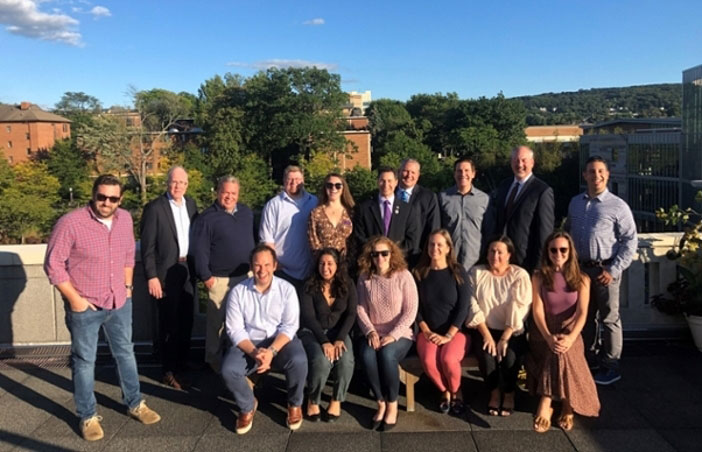
Our department’s team of experts powerfully demonstrates the love of history. Representing a broad range of experience and knowledge, professors are dedicated to their students and interact with them personally. Distinguished faculty are also committed to research, scholarship and publishing in order to advance the discipline and extend the reach of the University of Scranton’s history department. Thanks to extensive connections, our experienced faculty bring contemporary experts to speak on campus.
Whether presenting at the American Historical Association’s Annual Meeting, leading study tours, or mentoring individual students, faculty members model both teaching and scholarship at its best. Just a few examples:
- Dr. Susan Poulson recently published a new book on the history of women's suffrage in the United States.
- Dr. Roy Domenico received the Distinguished Teaching Award from the American Catholic Historical Association. Dr. Domenico leads popular study trips to Europe every other year and colors his teaching of history with references to another passion—old movies.
- Dr. Shuhua Fan presented her paper “A Golden Decade in China: The Harvard-Yenching Institute and Yenching University (1928-1937)” at an international conference in Beijing, China.
- Dr. David Dzurec is the most recent history department faculty member to receive a Fulbright grant. As part of his grant Dr. Dzurec taught American history and politics at Trnava University in the Slovak Republic.
Roy P. Domenico

Chair
Chair and Professor
B.A., University of Wisconsin-Milwaukee
M.A., University of Connecticut
Ph.D., Rutgers University
U. Melissa Anyiwo
Associate Professor-Director Black Studies Concentration
Sean Brennan

Professor
B.A., Rockhurst University
M.A., Villanova University
Ph.D., University of Notre Dame
David J. Dzurec

Interim Dean College of Arts and Sciences and Professor
B.A., Fairfield University
M.A., University of Connecticut
Ph.D., The Ohio State University
Shuhua Fan
Professor
B.A., Sichuan Normal University
M.A. Jilin University
M.A., Ph.D., The University of North Carolina at Chapel Hill
Christopher Gillett

Aiala Levy

Susan Poulson

Adam J. Pratt

Paul Sampson

Robert W. Shaffern

Professor
B.A., DePaul University
M.A., Ph.D., University of Notre Dame
Daniel Sweeney, S.J., Ph.D.
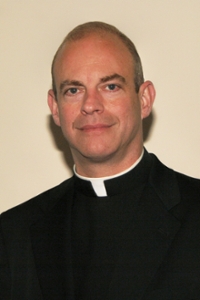
Assistant Professor
A.B., Georgetown University
M.A., Fordham University
M.Div., Jesuit School of Theology, Berkeley
Ph.D., University of Cambridge
Phone: 570-941-5933
Send an email
Willis M. Conover
Michael D. DeMichele

Professor Emeritus
B.S., The University of Scranton
M.A., Ph.D., The Pennsylvania State University
Josephine M. Dunn

Professor Emeritus
B.A., B.F.A., University of Houston
M.A., Ph.D., University of Pennsylvania
Francis X.J. Homer

Lawrence W. Kennedy

Lee M. Penyak
W. Jeffrey Welsh

Inside the Classroom:
The Department supports the liberal arts mission of the University by giving students a historical perspective on the human condition, while, at the same time, contributing to the development of their ability to read perceptively, write cogently, and think logically. Key aspects include
- An emphasis on personal growth, professional competence, and civic responsibility
- Attention to the context in which history is written and how perceptions may change over time
- Service learning with the inspiration of local history
History and I.S. Majors have numerous opportunities to expand on their experience inside the classroom. They may
- pursue “on the job” experiences through off-campus internships where they use their knowledge and skills in work situations related to their majors.
- pursue specialized learning activities through Independent Study.
- elect to study outside the United States for a semester or a year
- take advantage of opportunities to be involved in faculty research.
Student Research:
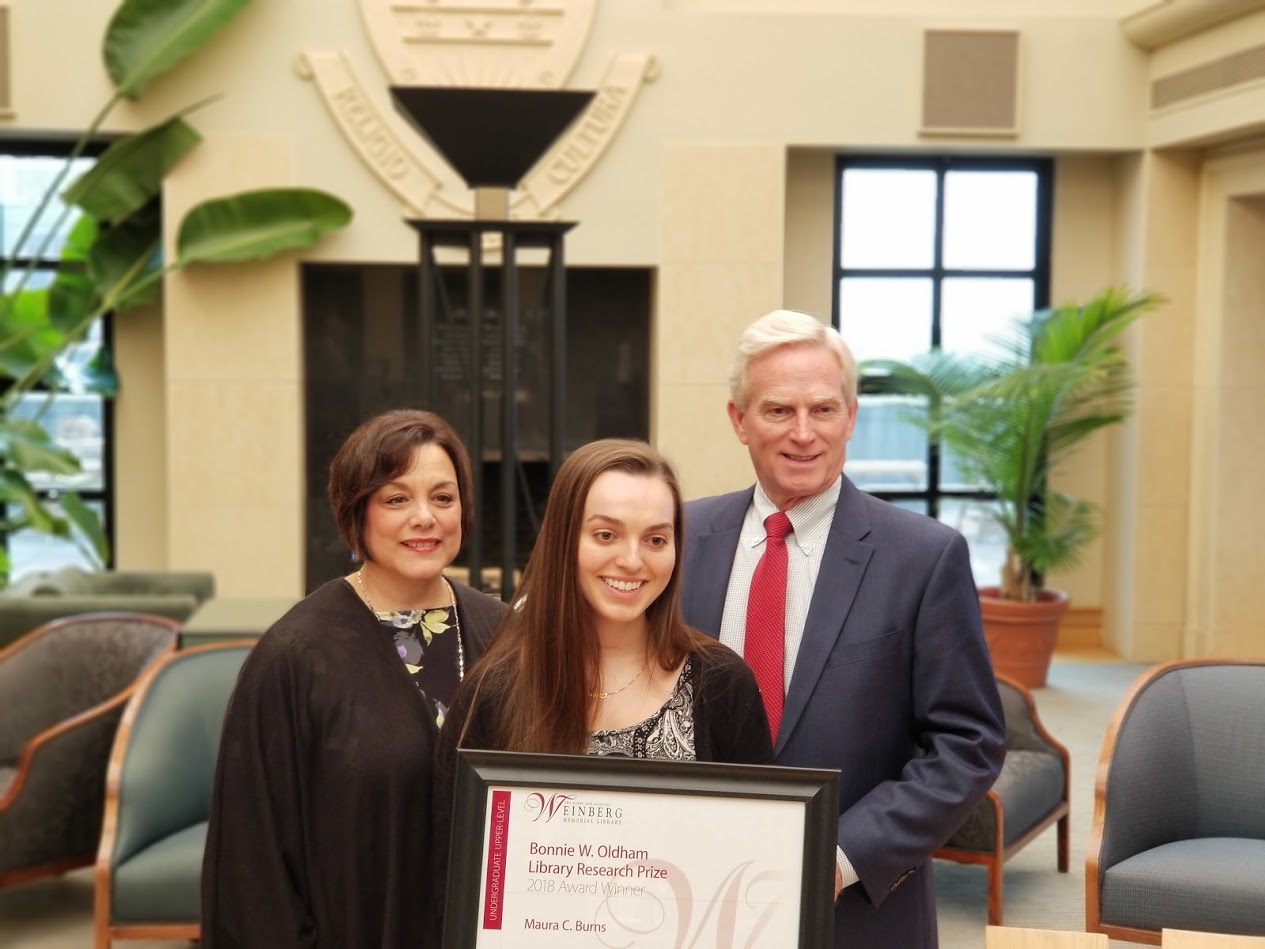
Maura Burns, Class of 2018, received the Weinberg Memorial Library’s Undergraduate Research Prize for her senior thesis, titled “Medicine in the American Revolution.” The project combined her love for medicine and her passion for history. After graduation Maura went on to dental school.
Independent study in Scranton’s history department is student-driven and flexible.
Adam Pratt, Ph.D., Associate Professor of History
Career Outcomes:
You’ll find Scranton graduates with a history degree working in fields such as:
- Government
- Law
- Education
- Public service/Politics
- Business
- Medicine
The study of history is advantageous to many different careers, helping students to develop both academically and professionally. Graduates are armed with transferable skills in critical thinking, analysis and communicating. Many students choose double majors with history and another discipline, and, in the tradition of a liberal arts Jesuit education, are prepared for a vast array of occupations or advanced study. More information